Thane West, Maharashtra, 400601
Blogs
What Patients Get Wrong About “Slipped Disc”
“Slipped disc” is one of the most commonly used terms for back and neck pain. But the term itself can create unnecessary fear. A slipped disc—more accurately called a herniated or prolapsed disc—does not automatically mean severe damage, permanent disability, or surgery.
Understanding what a slipped disc actually means can help patients make better decisions about their spine health and understand when specialist evaluation may be necessary.
Myth 1: A slipped disc means the disc has literally slipped out
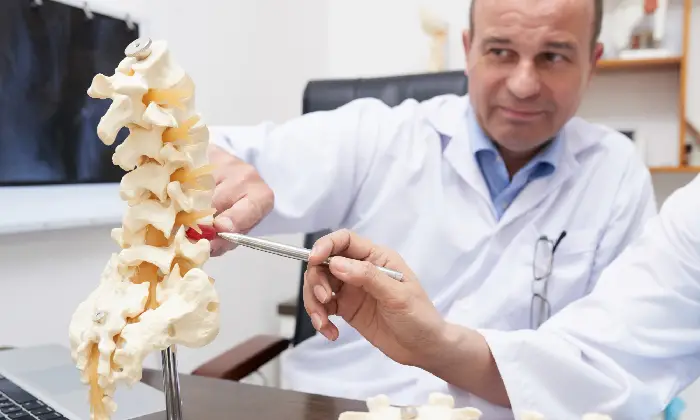
The disc does not usually “slip” out of the spine. Spinal discs sit between the vertebrae and act as cushions. When the outer layer develops a tear or weakness, the softer inner material can protrude outward. This is known as a herniated disc.
If the protruding disc irritates or compresses a nearby nerve, it can cause symptoms such as back pain, sciatica, numbness, tingling or weakness in the leg or arm.
Myth 2: Every slipped disc requires surgery
This is one of the biggest misconceptions about slipped discs.
Most people with a herniated disc do not immediately need surgery. Depending on the symptoms and clinical findings, treatment may initially involve medication, activity modification, physiotherapy and other non-surgical approaches. Many patients improve over time with appropriate conservative management.
Surgery may be considered when symptoms persist despite appropriate treatment, or when there is significant nerve compression causing neurological problems such as progressive weakness.
The decision should be based on the patient’s symptoms, neurological examination and imaging together—not the MRI report alone.
Myth 3: A “large” disc on MRI always means severe symptoms
An MRI can show a disc bulge, protrusion or herniation, but the scan does not tell the entire story.
A patient may have a disc abnormality without significant symptoms. Conversely, a relatively small disc herniation can cause substantial pain if it affects an important nerve.
That is why a spine specialist evaluates the location of the disc problem, the nerves involved, symptoms, muscle strength, reflexes and sensation before recommending treatment.
Myth 4: Bed Rest Is the Best Treatment
When pain is severe, resting may provide temporary comfort. However, prolonged inactivity is generally not the goal of recovery.
Once medically appropriate, gradually returning to movement and following a structured rehabilitation plan can help improve mobility and strengthen the muscles supporting the spine. Physiotherapy may be recommended as part of conservative treatment.
Myth 5: Back Pain Automatically Means a Slipped Disc
Not every episode of back pain is caused by a herniated disc.
Back pain can have several causes, including muscle strain, degenerative changes, spinal arthritis and other spinal conditions. A proper clinical assessment helps determine whether a disc problem is actually responsible for the symptoms.
When Should You See a Spine Specialist?
Persistent or worsening back pain, pain travelling down the leg or arm, numbness, tingling or weakness deserve medical evaluation.
Loss of bladder or bowel control, significant weakness or difficulty walking can indicate serious nerve compression and requires urgent medical attention.
The Right Question Isn't “How Bad Is My MRI?”
If you have been diagnosed with a slipped disc, the more important questions are:
Is the disc actually causing my symptoms? Is a nerve being compressed? And what treatment is appropriate for me?
Every disc problem is different. A personalised evaluation by an experienced brain and spine neurosurgeon can help determine whether conservative treatment, further investigation or surgery is appropriate.
Expert Spine Care in Thane
Dr Amit Aiwale, Consultant Brain & Spine Neurosurgeon, has over 15 years of experience in neurosurgery and specialises in spine conditions, including disc prolapse and endoscopic spine surgery.
If you are experiencing persistent back or neck pain, sciatica, numbness, tingling or weakness, an appropriate evaluation can help identify the underlying cause and guide the right treatment.
Frequently Asked Questions
What is a slipped disc and how does it happen?
A slipped disc occurs when the softer inner material of a spinal disc pushes through a weakened or damaged outer layer.
What are the symptoms of a slipped disc?
Symptoms can include back or neck pain, sciatica, numbness, tingling and weakness in an arm or leg.
Why does a slipped disc cause leg or arm pain?
A herniated disc can irritate or compress a nearby spinal nerve, causing pain or altered sensation along the nerve’s pathway.
What treatment is needed for a slipped disc?
Treatment depends on symptoms and examination and may include medication, physiotherapy and activity modification, with surgery considered in selected cases.
Why might a slipped disc require surgery?
Surgery may be considered when symptoms persist despite appropriate treatment or when significant nerve compression causes progressive neurological problems.
Conclusion
A slipped disc does not automatically mean severe spinal damage or the need for surgery. The condition can vary significantly from one person to another, and an MRI finding alone does not determine the appropriate treatment.
Understanding your symptoms, neurological examination and imaging together can help identify whether a herniated disc is actually causing your problem. If you have persistent pain, numbness, tingling or weakness, consult a spine specialist for an appropriate evaluation.

